
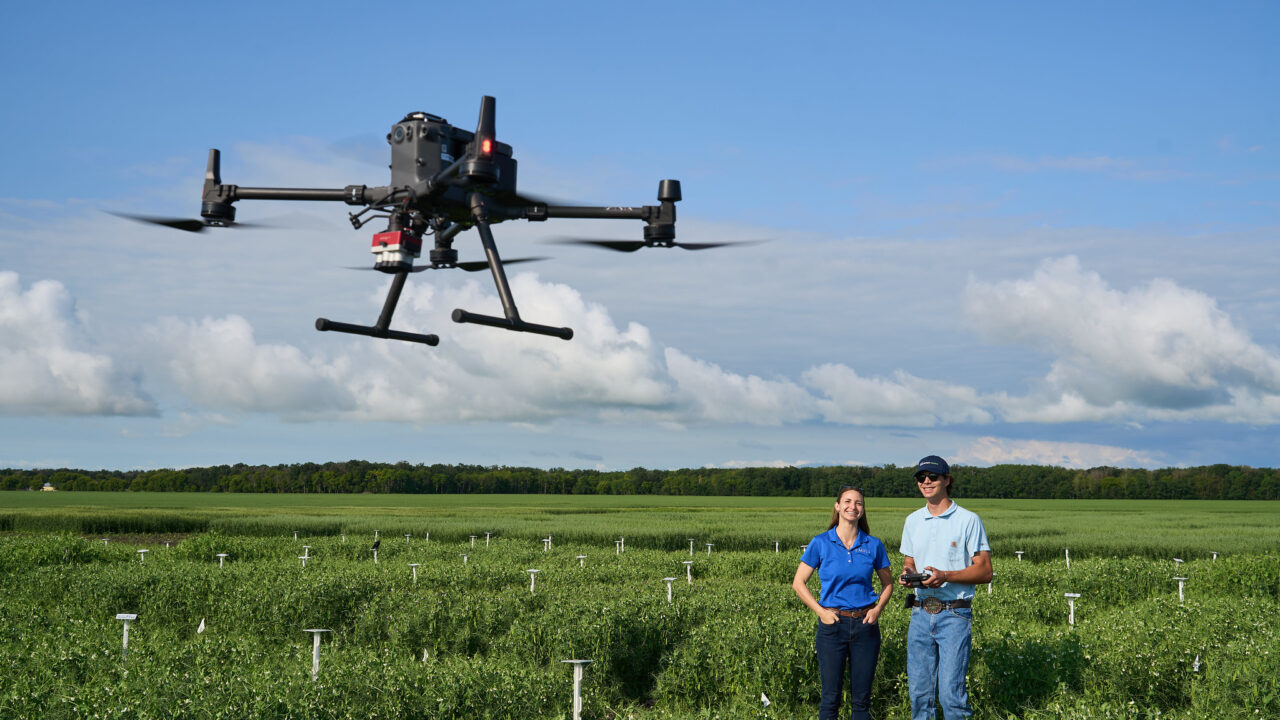
A new EMILI report examines how digital tools are changing farm work—and why skills, training, and support will determine who benefits.
Technology is changing how farm work is planned, performed, and managed across Manitoba.
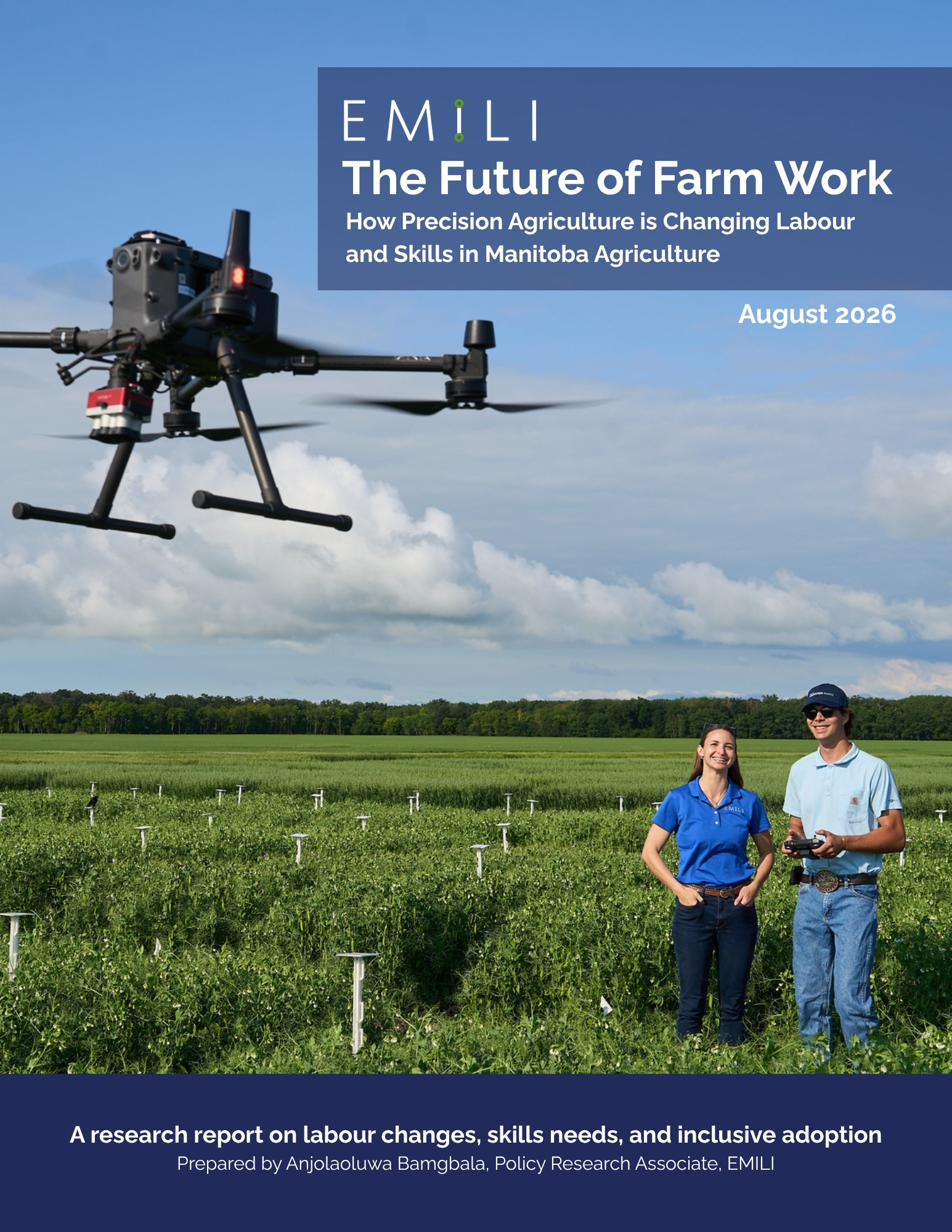
The future of farm work report published August 2026.
GPS-guided equipment, sensors, variable-rate technology, and farm data platforms are helping producers make more precise decisions. They are helping to manage inputs and operate increasingly complex farms too. As this unfolds, the skills required of producers and their employees must evolve at an equal pace. The same holds true for students, advisors, and technical support providers.
EMILI’s new report, The Future of Farm Work: How Precision Agriculture is Changing Labour and Skills in Manitoba Agriculture, examines what these changes mean for provincial workforce development, technology adoption, and rural communities.
Its central finding is clear: precision agriculture should be treated as part of Manitoba’s broader workforce challenge. Technology can help farms manage labour pressures, but its benefits depend on whether people have the skills, confidence, and support required to use it effectively.
Manitoba farms are under growing workforce pressure
Manitoba farms are becoming larger and more complex. Between 2001 and 2021, the province’s average farm size increased by 32.1 percent—from 891 acres to 1,177 acres.
At the same time, agricultural employers are struggling to fill available roles. In 2022, Manitoba agriculture had approximately 1,300 unfilled positions during peak season. Forty per cent of employers said they could not hire all the workers they needed, and almost two-thirds of that group reported lost sales or production delays.
Precision agriculture can help people manage more acres, use inputs more efficiently, and reduce fatigue associated with some farm tasks. However, adopting new technology does not necessarily eliminate the need for workers. More often, it reorganizes the work they do.
Some routine activities may be reduced or automated, while new responsibilities emerge around interpreting data, calibrating equipment, troubleshooting software, maintaining digital records, and working with agronomists, equipment dealers, and technical service providers.
Technology is raising the skill floor
The report describes this shift as a rising “skill floor”: an increase in the minimum combination of practical, technical, and digital skills people need to participate effectively in farm work.
Traditional agricultural knowledge remains essential. Understanding crops, soil, weather, machinery, livestock, and local growing conditions is still fundamental. Precision agriculture now adds another layer to that knowledge.
Variable-rate application, for example, involves more than operating equipment. A producer may need to interpret soil data and spatial maps, apply agronomic judgement, and determine how input rates should vary across a field.
Operating GPS-guided and connected equipment can also require workers to combine mechanical knowledge with software troubleshooting, data management, and an understanding of how different systems work together.
This makes practical training and trusted technical support central to successful adoption.
Adoption is widespread, but uneven
These findings are important because digital and precision agriculture tools are already widely present in Manitoba, particularly in crop production. And their presence will only increase in the coming years.
In 2021, 55.9% of Manitoba farms reported using at least one selected agricultural technology. Among oilseed and grain farms, adoption reached 83.6%, the highest rate among the farm types reported. Auto-steer was used on 41.4% of Manitoba farms, placing the province second highest in Canada for its use.
However, adoption varies across farm types and operations. Cost, connectivity, uncertain returns, limited access to advice, and concerns about farm data can all affect whether a farm adopts a technology—and whether it can use that technology to its full potential.
Larger farms may be better positioned to spread upfront costs across more acres or access specialized technical support. Smaller farms and new entrants may face tighter margins and fewer opportunities to test tools before investing.
Barriers can also affect rural and seasonal workers, older producers, women, Indigenous producers, newcomers, and others who may not have equal access to capital, connectivity, training, or advisory networks.
Without inclusive training and adoption support, the benefits of digital agriculture could become concentrated among the farms and people already best positioned to access them.
Five opportunities for Manitoba
The report identifies five actions Manitoba can take:
- Expand practical digital agriculture training for producers, workers, students, and advisors.
- Scale farm data literacy and data-governance education so people understand how agricultural data is collected, used, shared, and protected.
- Design adoption support that is tailored for smaller farms and underrepresented groups so programs reach those facing the greatest barriers.
- Connect commercial-scale demonstration sites with workforce and career development so producers, students, and workers can see technologies in operation and understand the skills they require.
- Establish a workforce working group within the Manitoba Digital Agriculture Table to improve coordination among employers, educators, producer organizations, technology providers, and government.
Manitoba already has many of the pieces
Manitoba, and people across the agriculture industry in the province, are already taking many positive steps to make use of and fully utilize the promise of new technologies.
EMILI’s Innovation Farms provides a commercial-scale environment where producers, students, innovators, and policymakers can observe technologies under Manitoba conditions. EMILI’s Fundamentals of Farm Data program supports practical data literacy and responsible farm-data use.
Post-secondaries, producer organizations, employers, equipment dealers, advisors, government programs, and industry groups also contribute important expertise and support.
The opportunity is to connect these resources more deliberately. Better coordination could make training easier to access, provide more hands-on learning opportunities and help ensure that workforce development keeps pace with technological change.
Precision agriculture will continue to reshape farm work. Manitoba’s opportunity is to ensure that producers, workers, students, and rural communities have the skills and support needed to participate in that change and benefit from it.
Read or download The Future of Farm Work: How Precision Agriculture is Changing Labour and Skills in Manitoba Agriculture.